Core Principles of Rights-based Conservation
Securing legal ownership and customary
rights for indigenous groups over ancestral territories.
These areas statistically exhibit lower deforestation and
biodiversity loss, yet face trade‑offs in global paradigms
like REDD+ and Blue‑carbon management.
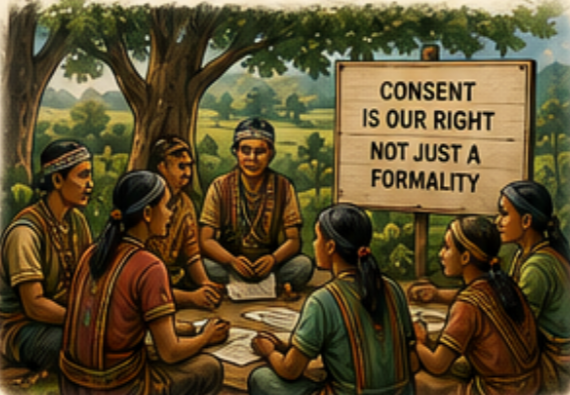
Requiring meaningful community consent
before any external conservation or development project on
indigenous lands. Raises concerns on 'Access and Benefit
Sharing' with indigenous peoples and local communities.
Shifting communities from passive subjects to active
decision‑makers
via co‑management and ICCAs. Debates centre on inequitable
decision‑sharing in fiscal mechanisms like carbon markets
and biodiversity credits; IP/LC lack capabilities to
become agents of change in neo‑economic frameworks.
Rights-based Conservation: Implementation Challenges in Developing
Regions
National governments in developing nations frequently
prioritize centralized state control or corporate resource
extraction over local customary claims.
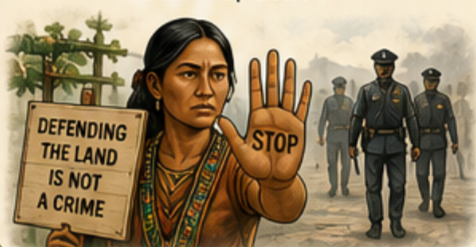
Environmental defenders in developing countries often face
severe safety risks, legal marginalization, and lack of
institutional protection.
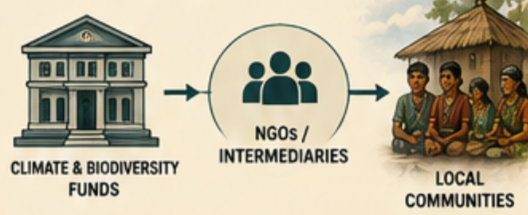
Limited direct access to global climate and biodiversity
funding forces communities to rely on intermediary NGOs
rather than self-directed stewardship.
Policy gaps in rights-based conservation for indigenous peoples
include weak legal recognition of land tenure, failure to enforce
Free, Prior, and Informed Consent (FPIC), and the persistence of
top-down exclusionary management. These gaps marginalize indigenous
guardians and reduce ecological success. Some are highlighted below
Governance and Participation Gaps
Tokenistic inclusion:
Indigenous peoples are consulted but lack actual
decision-making power.
Exclusionary models:
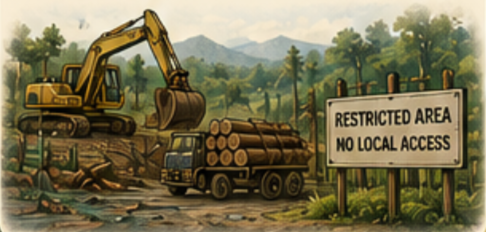
Traditional "fortress conservation" parks restrict local
access and criminalize traditional practices.
Internal inequalities:
Policies frequently fail to protect the specific
leadership and land rights of indigenous women, youth, and
disabled members.
Legal and Tenure Gaps
Unsecured land rights:
National laws often fail to legally recognize ancestral
territories inside state-declared protected areas.
Weak FPIC enforcement:
Fewer than half of biodiverse nations legally define and
enforce consent protocols before launching green projects.
Resource mismatch:
Funding streams overwhelmingly favour state-led
enforcement rather than community-led territorial
monitoring.
ICARSIS has a mandate to
integrate policies and mobilize resources through equitable
partnership, convergence and participatory action, in bridging these
gaps.